One very important step in restoring Florida’s natural environment that anyone can do is learning how to identify an invasive species. In fact, it is not a difficult feat at all!
Identifying invasive species will help to prevent the loss of natural biodiversity and reverse some of the already done damage.
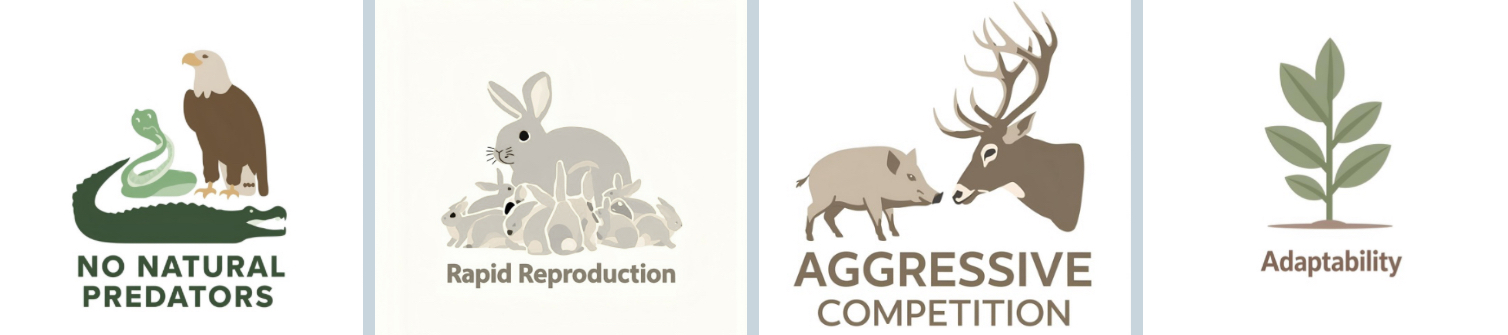
Actually learning how to identify invasive species is not as hard as it may seem. While there is no one set way to identify an invasive species without confirming it with a certified wildlife source (provided below), there’s many effective ways to be near certain. Below features a simple outline and additional infographic that may help you to do your part!
Characteristics of Invasive Species:
Above are simply the most common and key features in identifying if a species is of a native or invasive population. Some other traits include no consistent or set diet and a bizarrely exotic appearance.
As Florida is so diverse in its wildlife population, it is never safe to assume with certainty that a species is invasive without confirming with a wildlife source, such as the Florida Fish and Wildlife Conservation Commission (FWC), the University of Florida IFAS extension, the Florida Exotic Pest Plant Council (FLEPPC), the Florida Native Plant Society (FNPS), the Florida Invasive Spies Partnership (FISP), and so many more amazing resources!