Birds
Birds, some of the most commonly noticed animal in one’s day to day life, are extremely central to the environment of Florida. Many of the birds featured below are seen by you nearly daily, even if you dont notice! There are over 500 species of birds inhabiting the state of Florida, including migratory and invasive species. This page includes a few very common and fairly rare birds that have been spotted and photographed around the state.
The American Crow
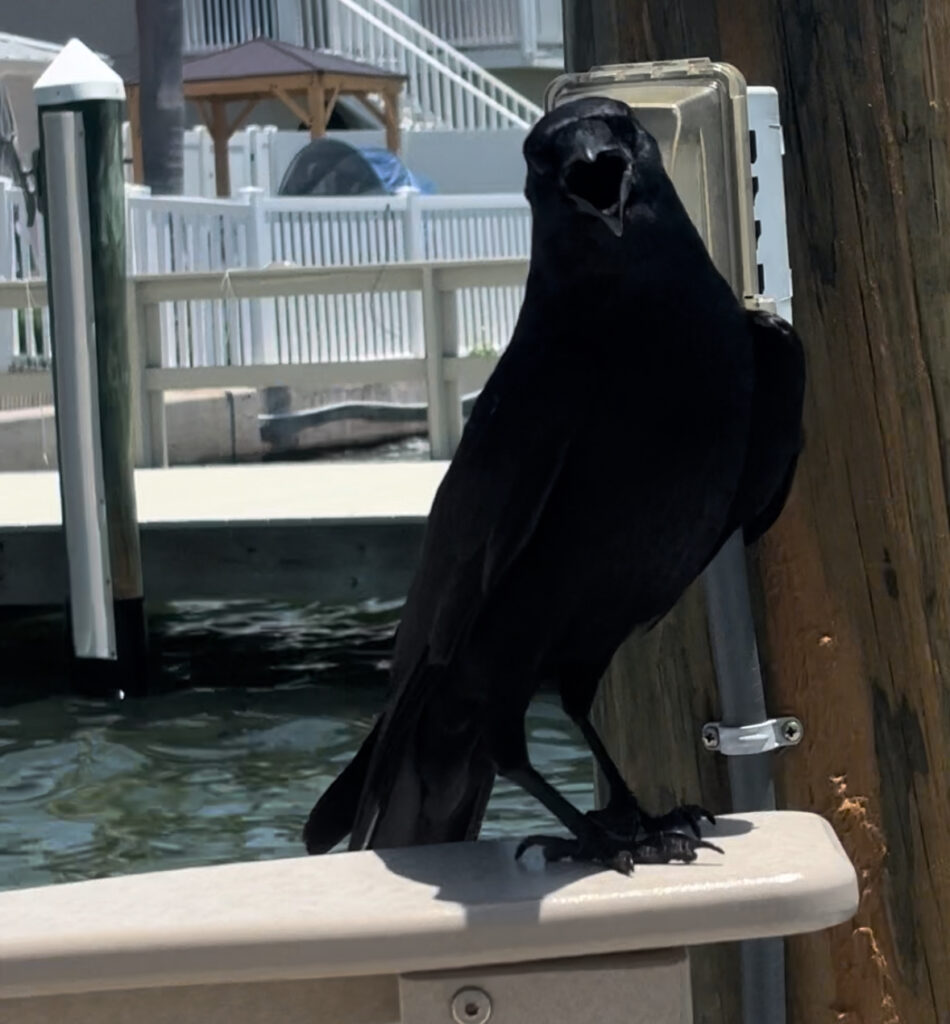
Native to North America, the American Crow is a large and incredibly intelligent bird. They’re easily recognizable by their all black plumage and eyes. Other all black birds may be mistaken for crows, though none of them match the intelligent gaze you will meet in the expression of this beautiful bird.
Endangerment
Thankfully, the American Crow is not currently at risk of endangerment or extinction. The population of this species is indeed continuing to flourish in Northern America, and can be found nearly everywhere in Florida.
Fun Facts
Being such an intelligent species, it is only to be expected that Crows have been adopted as pets on numerous occasions. Indeed, crows have been known to recognize humans and respond to them in a very friendly matter. Crows who take kindly to humans may sit with them, feed on snacks left by them, attempt to communicate with them, and they have even been known to bring gifts to people they befriend. However, if a crow is offended by a person, they react in an intensely harsh way; many crows have been known to harass humans and even gather larger murders of crows to come and join in on the attacks. That being said, always be kind and respectful to our beautiful bird friends- or you may regret it!
Black-Crowned Night Heron
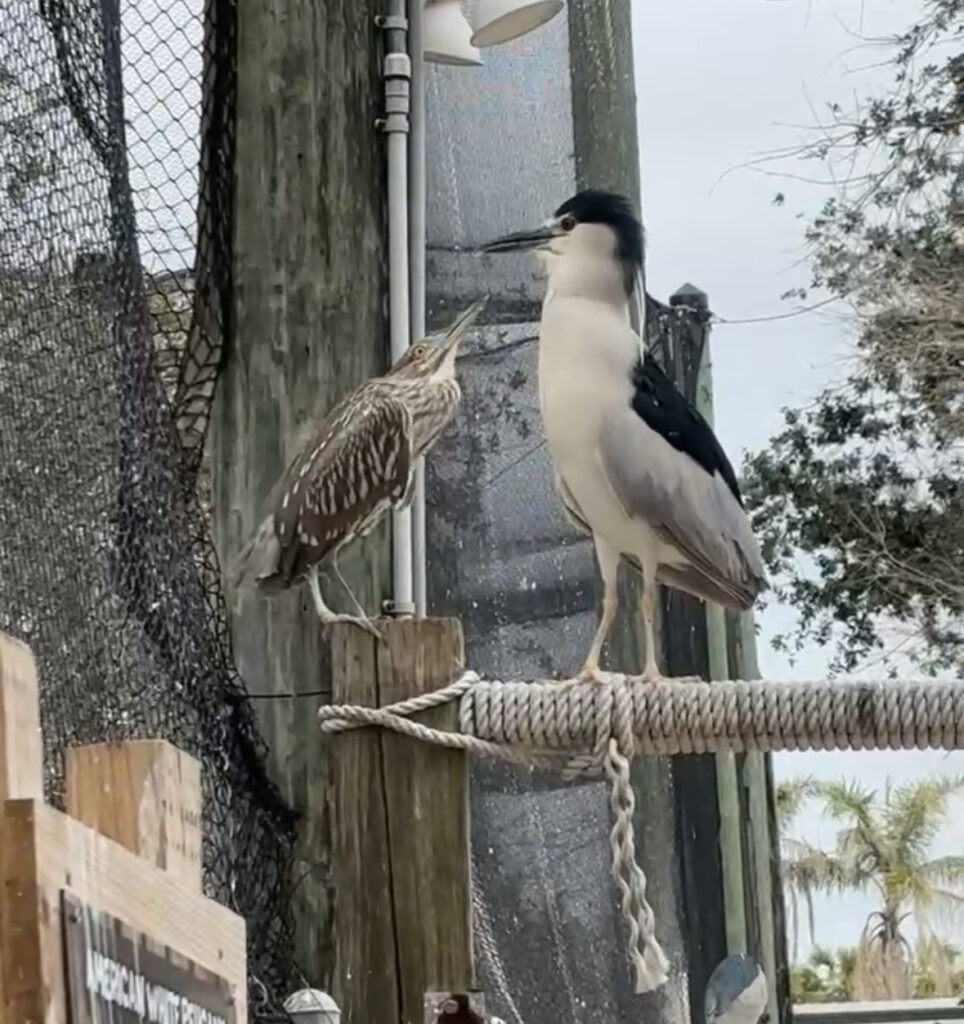
Native to North America, the Black-Crowned Night Heron is a medium sized bird of the heron family. The Black-Crowned Night Heron may be found not just in Florida, but in Europe, Asia, and South America. This bird may be recognized for its bright white belly, contrasting with its black back and cap. Further, they have distinctive red eyes as well as yellow legs that often appear pink during their breeding season.
On the left side of the depicted image is a juvenile Black-Crowned Night heron. On the right side is his (or her!) mother.
Endangerment
Fortunately, the Black-Crowned Night Heron is not at risk of extinction in Florida. While this species has faced the threat of endangerment in Florida in the past, they have since stabilized in population. However, in other states around America, the endangerment status of this species still varies.
Fun Facts
This species is a special symbol known among ancient cultures in Egypt, Japan, China, and various Native American tribes. This bird is seen as a pathway between worlds, serving as a “messenger” in these cultures. They are seen as embodiments of wisdom, healing, and freedom. This spiritual meaning is thought to have come from the heron being able to adapt to various different environments, giving it what is perceived as an existence not limited to this world.
Cooper’s Hawk
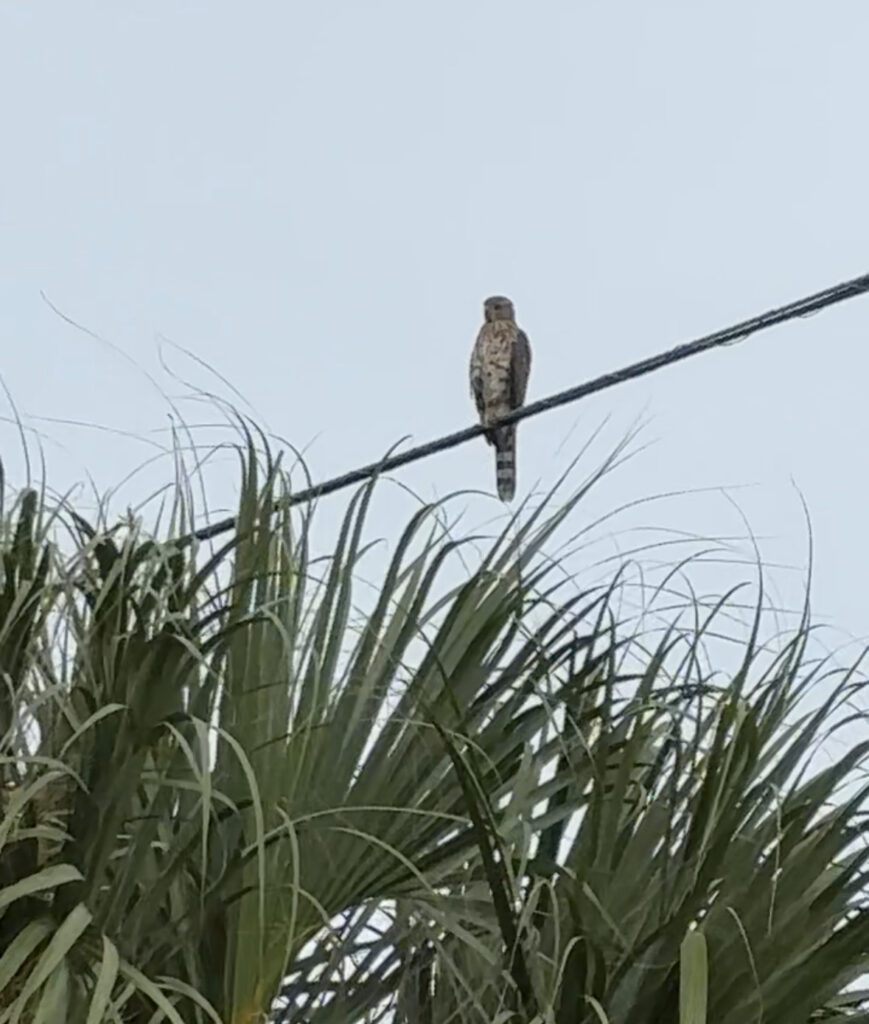
Native to North America and one of the eight hawks of Florida, the Cooper’s Hawk is a beautiful bird of prey that is distinct for its raccoon-like tail stripes. Males and females alike share this distinct trait, though the female Cooper’s Hawk is often both larger and stronger than her mate. They’re typically spotted in their natural habitat of forests, though they’ve been seen adapting to the loss of Florida’s environment as they’re now often seen in urban areas.
Endangerment
In the mid-20th century, the Cooper’s Hawk took an extremely sharp decline in population. In a short period of time, we faced the threat of losing this unique bird of prey. However, the hawk overcame this threat, and has come back even stronger in its numbers. As of 2025, this bird is now listed as a species of least concern on Florida’s endangerment list.
Fun Facts
The Cooper’s Hawk is most often mistakes for one of Florida’s eight species named the “Sharp-Shinned Hawk”. In fact, the two birds are so similar that one of their only distinctions is the shape of their tail feathers. The Cooper’s Hawk, as seen on the left, has a rounded shape to their striped tail-feathers, styling this bird in a softer way.
Great Blue Heron
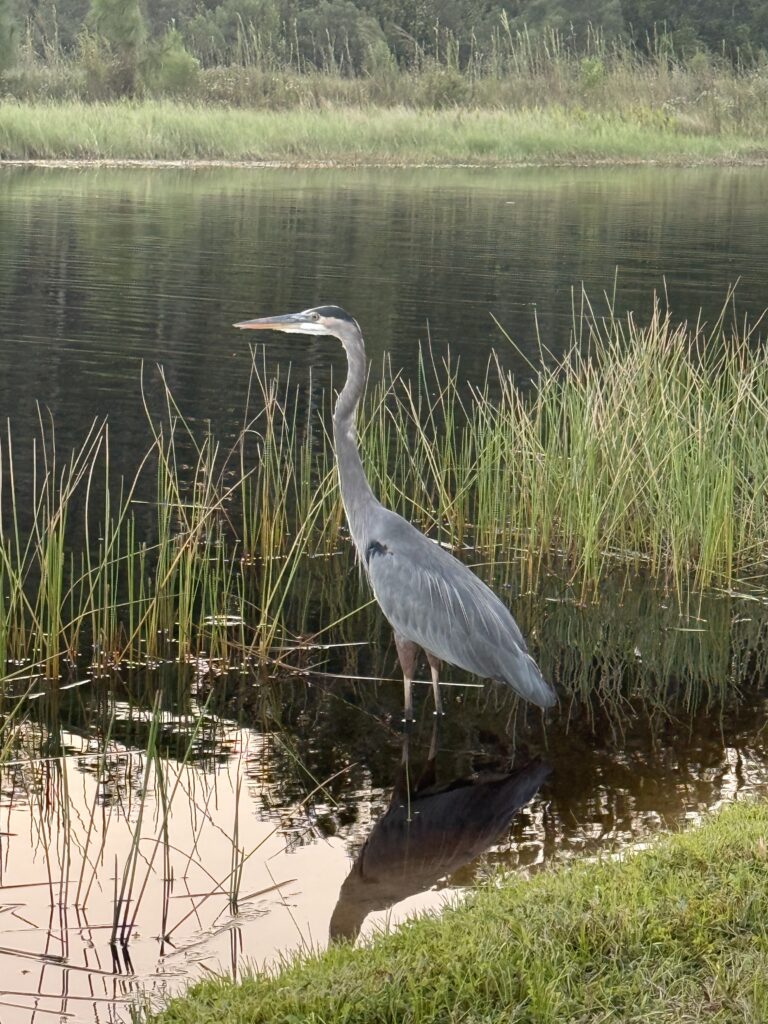
Native to North America, the Great Blue Heron can be recognized from its blue plumage, long neck, and insane size. The Great Blue Heron is the largest of its species, reaching a height of four and a half feet tall with a wingspan of between six and a half to seven and a half feet wide. Despite their great size, these birds weigh merely five pounds on average!
Endangerment
Fortunately, our tall friend is not of any concern on the endangerment list, with a continually growing population.
Fun Facts
These bizarrely large birds have a wide variety of diet, and often eat fish that are wider than their own necks!
Little Blue Heron
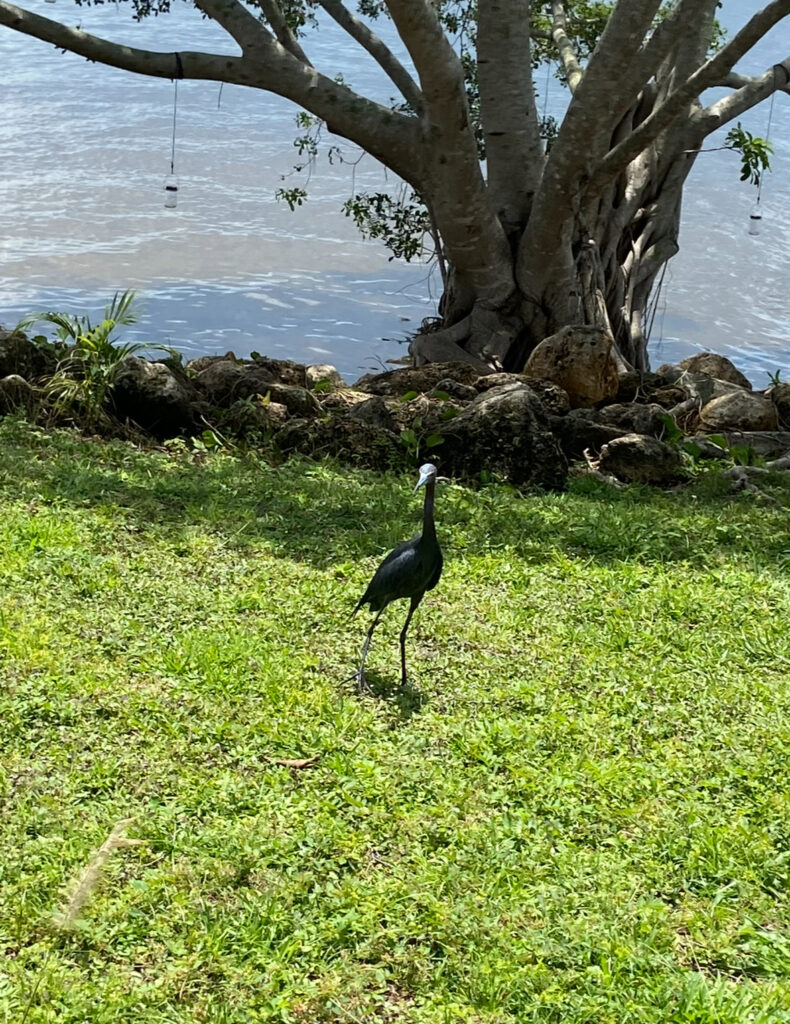
Native to North, South, and Central America is the Little Blue Heron, distinctive in its color and slender frame. Unlike the Great Blue Heron, this bird lives primarily by fresh water.
They’re often spotted alone, though they nest with a variety of other birds, creating what is a called a “Herony”.
Endangerment
Unfortunately, the Little Blue Heron population is steadily declining. Currently, its population numbers list it as of a low concern on the continental concern score. However, in Florida, it is considered a state threatened species due to the immense loss of its natural habitat due to human damage.
Protected by the U.S. Migratory Bird Treaty Act, it is imperative that we work to save this species through the protection of its environment.
Fun Facts
As juveniles, the Little Blue Heron is actually purely white. From a young age, it may even be mistaken for Florida’s common Snowy Egret. As this bird ages, it begins to progressively turn blue as it molts! A Little Blue Heron that is midway between its color stages will appear to be white with splotches of blue around its body, resembling a bad accident with some paint!
Yellow Crowned Night Heron
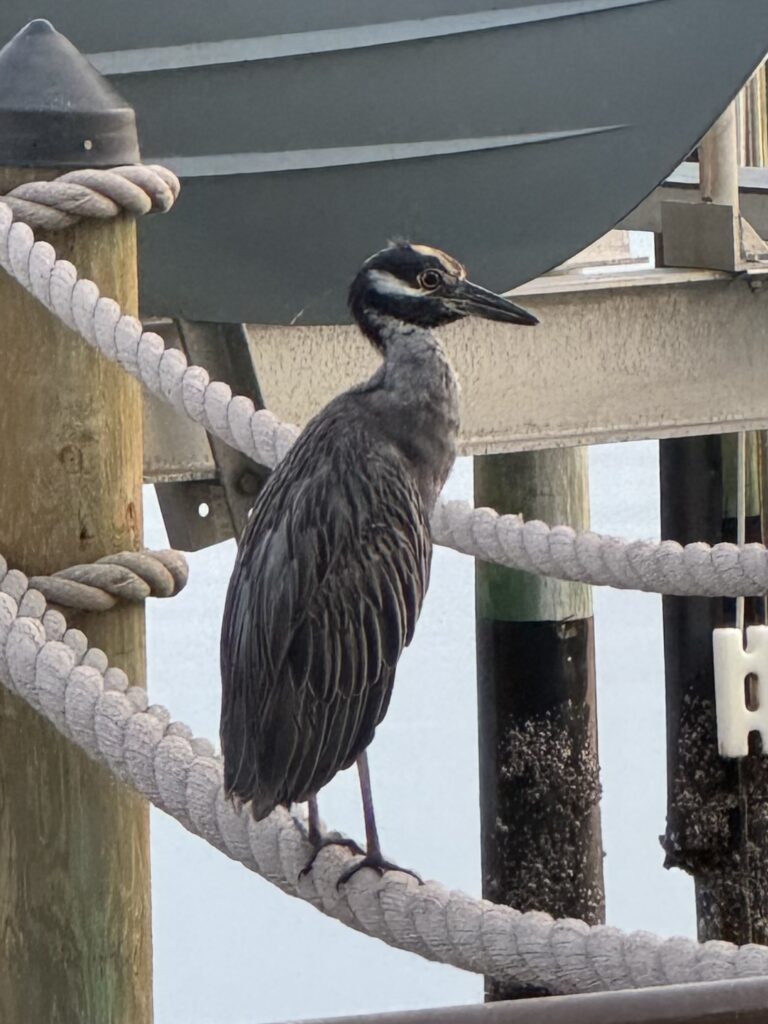
Native to South and Central America, the Yellow Crowned Night Heron may be identified for its dark body, stocky build, and its strikingly bright yellow crown of feathers.
The Yellow Crowned Night Heron is often found in wetlands, marshes, or hanging out in the mangroves. Unlike most herons, it’s more commonly seen at night time, where it hunts for small amphibians, crustaceans, and insects.
Endangerment
Fortunately, the Yellow Crowned Night Heron has a generally stable population. However, their natural habitats still face threats of human destruction, which would eventually cause the decline of this bird’s population.
Fun Facts
The intelligence of a bird should never be doubted, especially seeing as they often use tools to their advantage- in the same way a human might. This innovative bird has been spotted using rocks and sticks to break open the shells of crabs when their breaks are unable to.